Sphynx for breeding
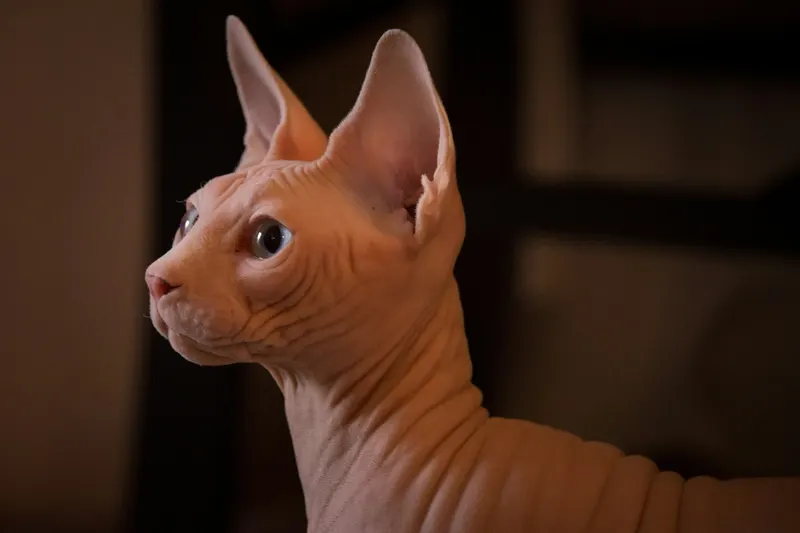
The Sphynx is a hairless, very sociable cat that dislikes being left alone. Without fur its skin gets greasy and cold quickly, so it needs regular baths and protection from cold and sun.
Recommended health tests
Ask the partner's owner for these results and get your own pet's tests ready.
Heart ultrasound (HCM)
A veterinary cardiologist checks by ultrasound whether the heart walls are thickening. HCM can develop later in life, so the scan is repeated.
Blood type
A type B queen's milk can kill type A kittens (neonatal haemolysis), so the blood type must be known before mating.
What to watch for when pairing
The breed's biggest risk is hypertrophic cardiomyopathy (HCM), so both parents need a recent heart scan, best repeated every year. Blood type B occurs in Sphynx cats, so check both parents' blood types before mating.
Breeding rules
FIFe recommends a DNA test for congenital myasthenic syndrome (CMS) in Sphynx cats: the inherited disease weakens a kitten's muscles and tires it quickly.
Sources
This list is a guide only. The breed club sets the exact requirements, and your vet can advise on health.
Useful guides
- Health tests before breedingWhich tests are done before mating, how to read the results and which pairings DNA results allow.
- The breeding contractWhat to put in writing before mating: the fee, a repeat mating, documents, costs and registering the litter.
- Cat matingHow cat mating works: the signs of heat, why the queen goes to the stud, which tests are needed and how long pregnancy lasts.