Scottish Fold for breeding
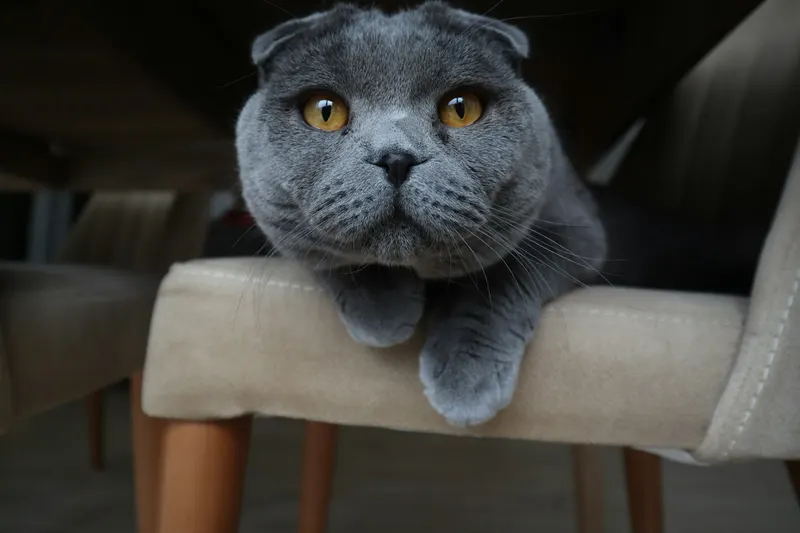
The Scottish Fold is calm and affectionate, and its ears are folded by a gene mutation. The same mutation damages the cat's cartilage throughout the body, which is why FIFe does not recognise the breed and some European countries ban breeding it.
Recommended health tests
Ask the partner's owner for these results and get your own pet's tests ready.
Heart ultrasound (HCM)
A veterinary cardiologist checks by ultrasound whether the heart walls are thickening. HCM can develop later in life, so the scan is repeated.
DNA test: PKD
Polycystic kidney disease: cysts form in the kidneys. It is dominant, so one copy of the gene is enough to cause it.
What to watch for when pairing
Two folds are never mated: their kittens are born with a severe bone and joint disease. When a fold is mated with a straight-eared cat, about half the kittens inherit the ear gene and with it the risk of painful joints as they age. Before mating, X-ray the parents' legs and tail and do a PKD DNA test and a heart scan.
This list is a guide only. The breed club sets the exact requirements, and your vet can advise on health.
Useful guides
- Health tests before breedingWhich tests are done before mating, how to read the results and which pairings DNA results allow.
- The breeding contractWhat to put in writing before mating: the fee, a repeat mating, documents, costs and registering the litter.
- Cat matingHow cat mating works: the signs of heat, why the queen goes to the stud, which tests are needed and how long pregnancy lasts.