British Shorthair for breeding
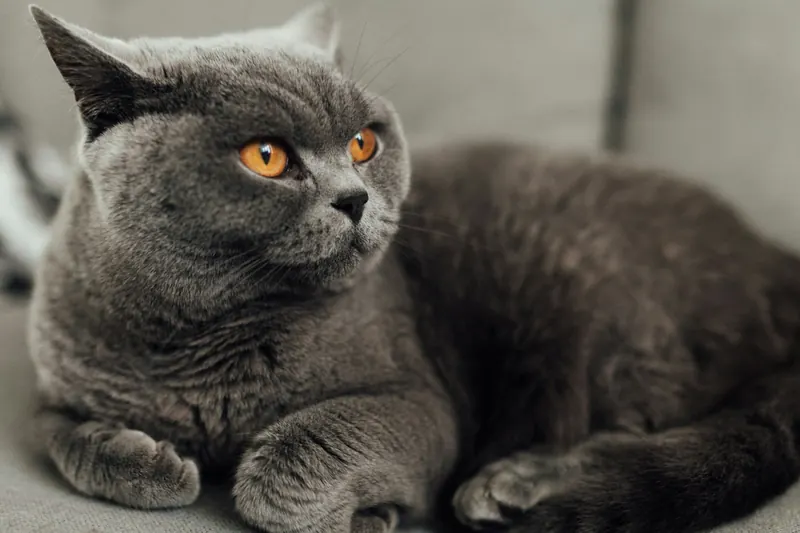
The British Shorthair is known for its calm nature, round face and dense plush coat. It is a sturdy breed, but its shared ancestry with Persians means kidney and heart disease do occur.
Recommended health tests
Ask the partner's owner for these results and get your own pet's tests ready.
DNA test: PKD
Polycystic kidney disease: cysts form in the kidneys. It is dominant, so one copy of the gene is enough to cause it.
Heart ultrasound (HCM)
A veterinary cardiologist checks by ultrasound whether the heart walls are thickening. HCM can develop later in life, so the scan is repeated.
Blood type
A type B queen's milk can kill type A kittens (neonatal haemolysis), so the blood type must be known before mating.
What to watch for when pairing
Before mating, have a DNA test for polycystic kidney disease (PKD1) and a heart echo scan for hypertrophic cardiomyopathy. Blood group B is common in British cats, so blood typing matters especially here: if a group B queen is paired with a group A tom, the kittens risk neonatal isoerythrolysis.
Breeding rules
Under FIFe rules, British Shorthairs may be mated to British Longhairs. Kittens with a parent that has osteochondrodysplasia (a Scottish Fold, for example) are not registered as British. FIFe also recommends a DNA test for autoimmune lymphoproliferative syndrome (ALPS) in the breed.
Sources
This list is a guide only. The breed club sets the exact requirements, and your vet can advise on health.
Useful guides
- Health tests before breedingWhich tests are done before mating, how to read the results and which pairings DNA results allow.
- The breeding contractWhat to put in writing before mating: the fee, a repeat mating, documents, costs and registering the litter.
- Cat matingHow cat mating works: the signs of heat, why the queen goes to the stud, which tests are needed and how long pregnancy lasts.